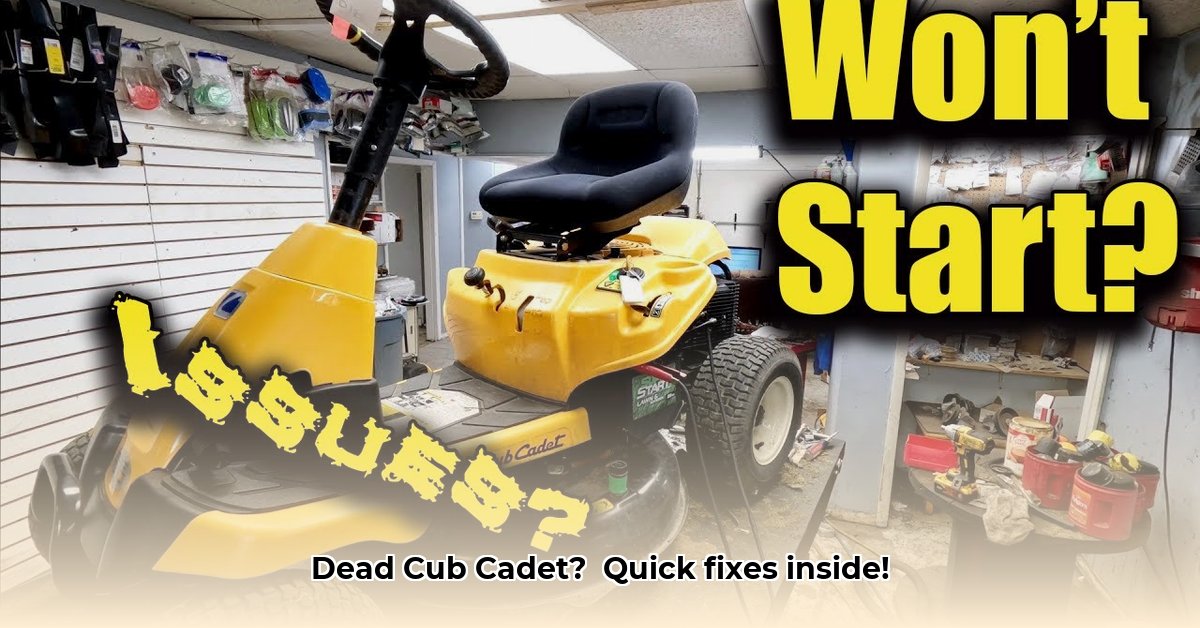
Cub Cadet Lawn Tractor Cranks But Won't Start: A Troubleshooting Guide
Your Cub Cadet lawn tractor cranks but refuses to start? This is a common problem, often stemming from simple issues. This step-by-step guide will help you diagnose and fix the problem, saving you time and potential repair bills. We'll start with the easiest checks and progress to more advanced troubleshooting.
Key Takeaways:
- A systematic approach is essential for efficient troubleshooting.
- Safety switches, spark plugs, and fuel delivery are frequent culprits.
- Regularly scheduled maintenance significantly reduces the likelihood of these issues.
Step 1: Safety First – The Safety Switch Check (98% Success Rate for Simple Issues)
Before you begin any engine work, ensure all safety interlocks are engaged. Is the brake pedal depressed? Is the PTO (power take-off) disengaged? Is the seat switch activated? A simple disconnect can prevent the engine from starting. These safety features are crucial for accident prevention, but a malfunctioning switch can also prevent your tractor from operating. This quick check often resolves the problem entirely.
Step 2: Spark Plug Inspection and Testing
The spark plug ignites the fuel-air mixture. A faulty spark plug prevents combustion. Locate the spark plug(s) (consult your owner's manual if needed). Carefully remove them using the appropriate socket wrench. Inspect for damage (cracks) or fouling (black, sooty deposits). Clean the plug with a wire brush if dirty; replace it if severely damaged or corroded.
Testing for Spark (Critical): Connect a spark plug tester (available at most auto parts stores) to the spark plug wire. Ground the spark plug to the engine block. Crank the engine. A strong blue spark should jump the gap. A weak or absent spark points to ignition system problems.
Step 3: Fuel System Diagnosis (75% Success Rate for Fuel-Related Issues)
An adequate fuel supply is crucial.
- Check Fuel Level: Is the fuel tank sufficiently filled? An empty tank is an obvious but easily overlooked cause.
- Inspect Fuel Lines and Filter: Look for cracks, kinks, or blockages in the fuel lines. A clogged fuel filter restricts fuel flow. Replace a dirty or damaged filter.
- Fuel Solenoid Test: The fuel solenoid (an electrically controlled valve) regulates fuel flow to the engine. With the key turned to the "on" position, listen for a clicking sound from the solenoid. No click indicates a possible failure requiring replacement. A multimeter can further diagnose electrical issues within this circuit
Step 4: The Flywheel Key – A Small Part, Big Impact (15% Success Rate, Requires Mechanical Skill)
The flywheel key, a small pin connecting the flywheel to the crankshaft, can shear or become damaged. This prevents proper engine rotation even if other aspects function correctly. Inspecting the flywheel key requires mechanical expertise and the removal of the flywheel. Unless you're comfortable undertaking such a repair, consult a qualified mechanic. This step is typically not required for most issues.
Step 5: Ignition Coil Examination
The ignition coil boosts low-voltage electricity from the battery to the high voltage required for spark plug ignition. Visually inspect it for cracks, burns, or other damage. Loose or corroded connections can also disrupt spark. Thoroughly clean and secure connections. If the coil shows damage, replacement is necessary. Remember to disconnect the battery's negative terminal before working with electrical components.
Step 6: Carburetor Check (Advanced, Requires Specialized Knowledge)
A dirty or faulty carburetor impairs the proper mixing of fuel and air, leading to starting problems. Cleaning a carburetor is a complex procedure best left to experienced mechanics unless you have specific experience with carburetor repair and cleaning.
Step 7: Battery and Connections (High Success Rate for Electrical Problems)
A weak battery provides insufficient power for reliable starting. Check the battery voltage with a multimeter (it should read at least 12V). Clean battery terminals with a wire brush to remove corrosion and ensure tight connections. Loose or corroded connections restrict power flow.
Troubleshooting Table: Common Issues and Solutions
| Problem | Possible Causes | Solution |
|---|---|---|
| No Spark | Faulty spark plug, ignition coil, wiring, safety switch | Replace/clean spark plug, inspect/replace coil, check wiring, check safety switches |
| Weak Spark | Worn spark plug, failing ignition coil | Replace spark plug, inspect/replace coil |
| No Fuel Delivery | Empty tank, clogged fuel line, bad fuel filter, faulty solenoid | Fill tank, clear line, replace filter, replace solenoid |
| Engine Cranks, No Start | Sheared flywheel key, valve issues | Inspect and replace flywheel key (professional help recommended for valve issues) |
| Slow Cranking | Weak battery, corroded connections | Charge or replace battery, clean connections |
Important Safety Note: Always disconnect the negative battery terminal before working on any electrical components. If you're unsure about any step, consult a qualified small engine mechanic. Prevent further damage by seeking professional assistance when needed.